
For homeowners along Florida’s Treasure Coast, termites are not a distant threat—they are a very real financial risk. Our state’s warm, humid climate provides the perfect environment for these “silent destroyers” to thrive year-round.
However, not all termites are created equal. In Florida, structural property damage is primarily caused by two distinctly different types: Subterranean termites and Drywood termites.
Understanding the differences between the two, their unique warning signs, and how they behave is the first crucial step to protecting your property before costly structural damage occurs.
1. Subterranean Termites: The Fast-Moving Structural Threat
Subterranean termites are by far the most destructive species. As their name implies, they live in massive underground colonies and require constant contact with moisture from the soil to survive.
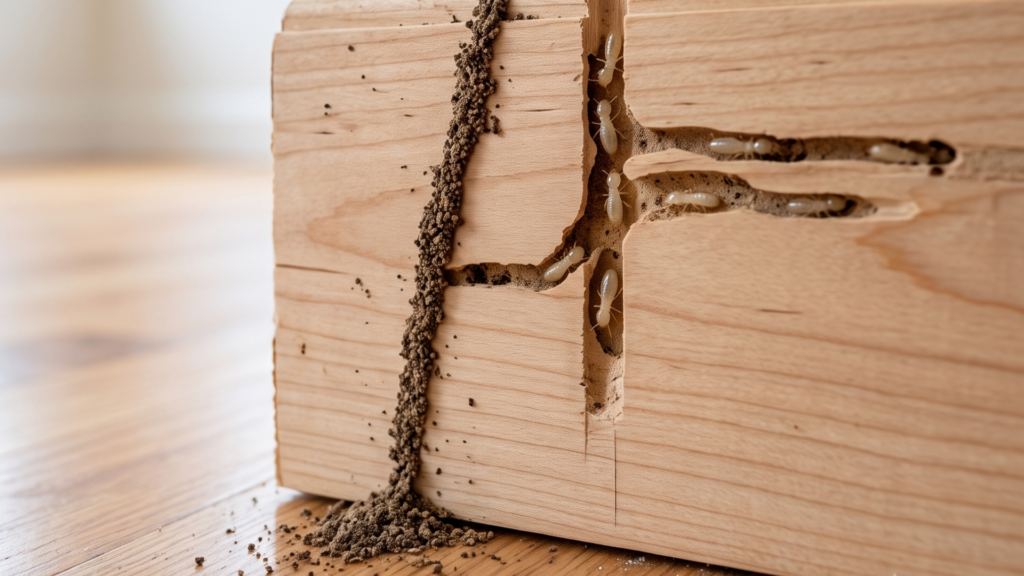
- How they attack: They build pencil-thin “mud tubes” to travel safely from the ground into your home’s wooden structure. They attack wood from the inside out, heavily preferring soft wood or wood that has been damaged by water.
- Key warning signs:
- Mud tubes running along your foundation, exterior walls, or support beams.
- Wood that sounds completely hollow when tapped.
- Discarded wings accumulated near doors or windows after a seasonal termite swarm.
2. Drywood Termites: The Silent Insiders
Unlike their subterranean cousins, drywood termites do not need soil or external moisture to survive. Instead, they establish their colonies directly inside dry wood completely above ground level.
- How they attack: They commonly infest roof rafters, wooden window frames, doors, baseboards, and even heavy wooden furniture. While they move slower than subterranean colonies, they are much harder to detect with the naked eye.
- Key warning signs:
- Frass: Tiny, sand-like piles of dry fecal pellets (resembling grains of sand or ground pepper) pushed out of the infested wood.
- Small, barely visible kick-out holes on the surface of drywall, wood, or furniture.
- Damaged wood or hollow sounds located in high areas of the home, such as the attic.
Comparison Table: Subterranean vs. Drywood
| Feature | Subterranean Termites | Drywood Termites |
| Colony Location | Deep underground (moist soil) | Inside dry wood structures (attics, furniture) |
| Moisture Need | High (must maintain ground contact) | Very low (extract water directly from the wood) |
| Primary Sign | Mud tubes on walls and foundations | Accumulated piles of fecal pellets (frass) |
| Damage Speed | Rapid (colonies can contain millions) | Moderate to slow (smaller, isolated colonies) |
Why DIY Termite Treatments Usually Fail
Attempting to eliminate a termite colony with a standard store-bought spray is like putting a band-aid on a cracked dam.
Subterranean termites require specialized chemical barriers injected into the soil or advanced baiting systems to eliminate the subterranean queen deep underground. On the other hand, drywood termites often demand targeted treatments with deep-penetrating professional products or, in severe cases, structural fumigation.
A simple misdiagnosis from a DIY method only buys the termites more time to quietly destroy your home’s resale value.
Professional Termite Protection and Control in Florida
At All American Pest Elimination, we don’t just get rid of pests—we protect your lifetime investment. Our locally certified technicians deeply understand Florida architecture and the specific behavior patterns of termites in our coastal region.
We utilize advanced inspection tools to locate hidden nests and apply eco-friendly, family-safe, and pet-safe protocols to guarantee the complete eradication of the colony.
Suspect you have termites? Don’t wait until the damage is done!
Contact us today to schedule a professional termite inspection.
Termite Treatment & Inspection Service Areas: All American Pest Elimination offers expert termite protection plans across Port St. Lucie, Fort Pierce, Stuart, Vero Beach, Okeechobee, and Indiantown, FL. Call today to secure your free residential or commercial estimate.