
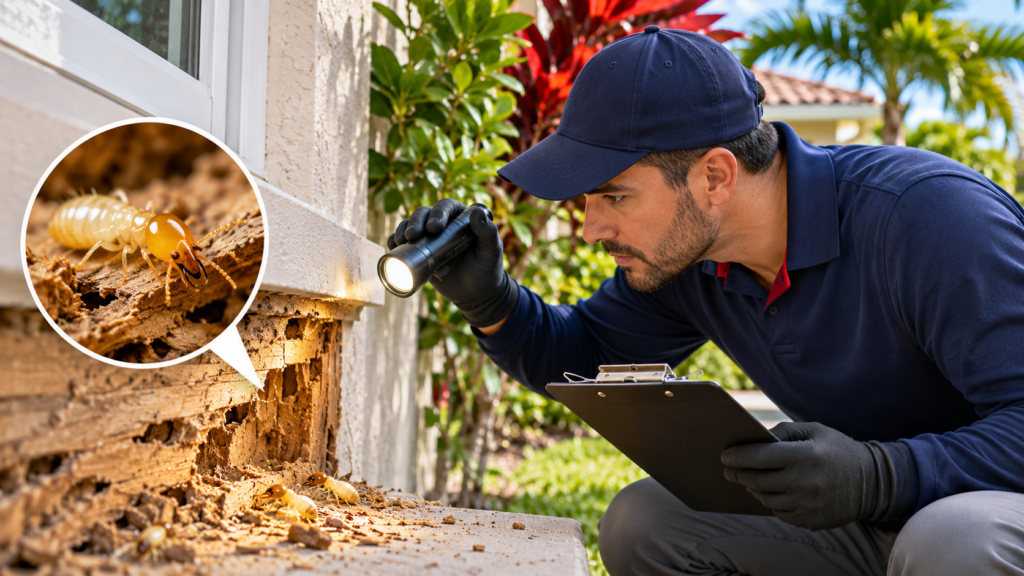
In South Florida, year-round warmth and coastal humidity create an ideal environment for wood-destroying organisms. Across Port St. Lucie, Fort Pierce, and Stuart, termites are often referred to as “silent destroyers” because they feed on structural timber, drywall backing, and wooden flooring behind the scenes for months—or even years—before visible warning signs appear.
Whether you are a longtime homeowner protecting your property’s equity or preparing for a real estate closing on the Treasure Coast, scheduling a professional termite inspection is one of the smartest investments you can make.
1. Subterranean vs. Drywood Termites in South Florida
Understanding which species threatens your property helps determine the right preventive or corrective treatment plan:
- Subterranean Termites: Living in large underground colonies, these termites build mud tubes along foundation walls to reach structural wood while maintaining contact with soil moisture. They can cause rapid, extensive structural damage if left unchecked.
- Drywood Termites: Unlike subterranean species, drywood termites do not require soil contact. They infest attic framing, wooden furniture, fascia boards, and window sills directly, often leaving behind tiny, pellet-like droppings (frass) near baseboards.
- Formosan Termites: An aggressive subterranean species found in coastal Florida capable of forming massive colonies that consume wood significantly faster than native species.
2. 5 Early Warning Signs of Termite Activity
Because termites avoid light and stay hidden inside wall voids, homeowners should watch for subtle indicators:
- Mud Tubes on Exterior Foundations: Pencil-thin earthen tunnels climbing concrete block walls, porch slabs, or utility pipes.
- Hollow-Sounding Wood: Baseboards, door frames, or wooden beams that sound papery or hollow when tapped.
- Discarded Swarms of Wings: Small piles of translucent, equal-sized wings near window sills or light fixtures after warm, humid afternoons.
- Blistering or Bubbling Paint: Paint that resembles water damage on drywall or wood trim without an active plumbing leak.
- Tight-Fitting Doors and Windows: Moisture produced by termite tunneling can warp wooden frames, making doors difficult to open or close.
Comparison Table: Visual DIY Checks vs. Certified Structural Termite Inspection
| Feature | Basic Homeowner Visual Walkaround | Certified Multi-Point Termite Inspection |
| Inspection Depth | Checks visible baseboards & exterior walls | Evaluates attics, crawlspaces, rooflines & soil perimeters |
| Early Detection | Usually spots activity after damage occurs | Identifies hidden mud tubes, moisture zones & early entry |
| Treatment Precision | Over-the-counter spot sprays miss the colony | Targeted soil barriers, baiting systems & localized wood treatments |
| Property Value Protection | High risk of costly structural repairs | Documentation & proactive protection for homeowners & real estate |
3. Targeted Protection Without Disrupting Your Home
At All American Pest Elimination LLC, we specialize in thorough wood-destroying organism evaluations and modern, low-impact treatment solutions. Our certified specialists inspect every vulnerable zone—from attic trusses and fascia boards to foundation soil perimeters—to deliver customized protection plans that safeguard your home’s structure and resale value.
Schedule Your Certified Termite Inspection Today
Don’t wait for visible structural damage to take action. Protect your property with a detailed evaluation from our local team.
📍 Service Areas: Port St. Lucie, Fort Pierce, Stuart, Vero Beach, Okeechobee, and Indiantown, FL.
📞 Take Action Today: Call us at +1 (772) 259-1976 to speak directly with our specialists and request your free residential or commercial estimate!